Eight months ago, Justin Kolbeck went on What’s Your Problem? with Jacob Goldstein, the journalist who created Planet Money.
If you don’t know the names: Goldstein built one of the most respected business shows in the world. Justin built Wildtype, which grows real salmon from cells in steel vats. No fish caught, none killed. One of the more remarkable things happening in climate tech.
It’s a great interview. He’s sharp, funny, honest about a genuinely hard problem. Then the episode dropped, he reshared the link once, and went quiet.
So I looked at his LinkedIn. 7,152 people follow him. His feed is reshares. Other people’s articles, the odd repost, a link to the podcast. His own thinking? Almost nowhere.
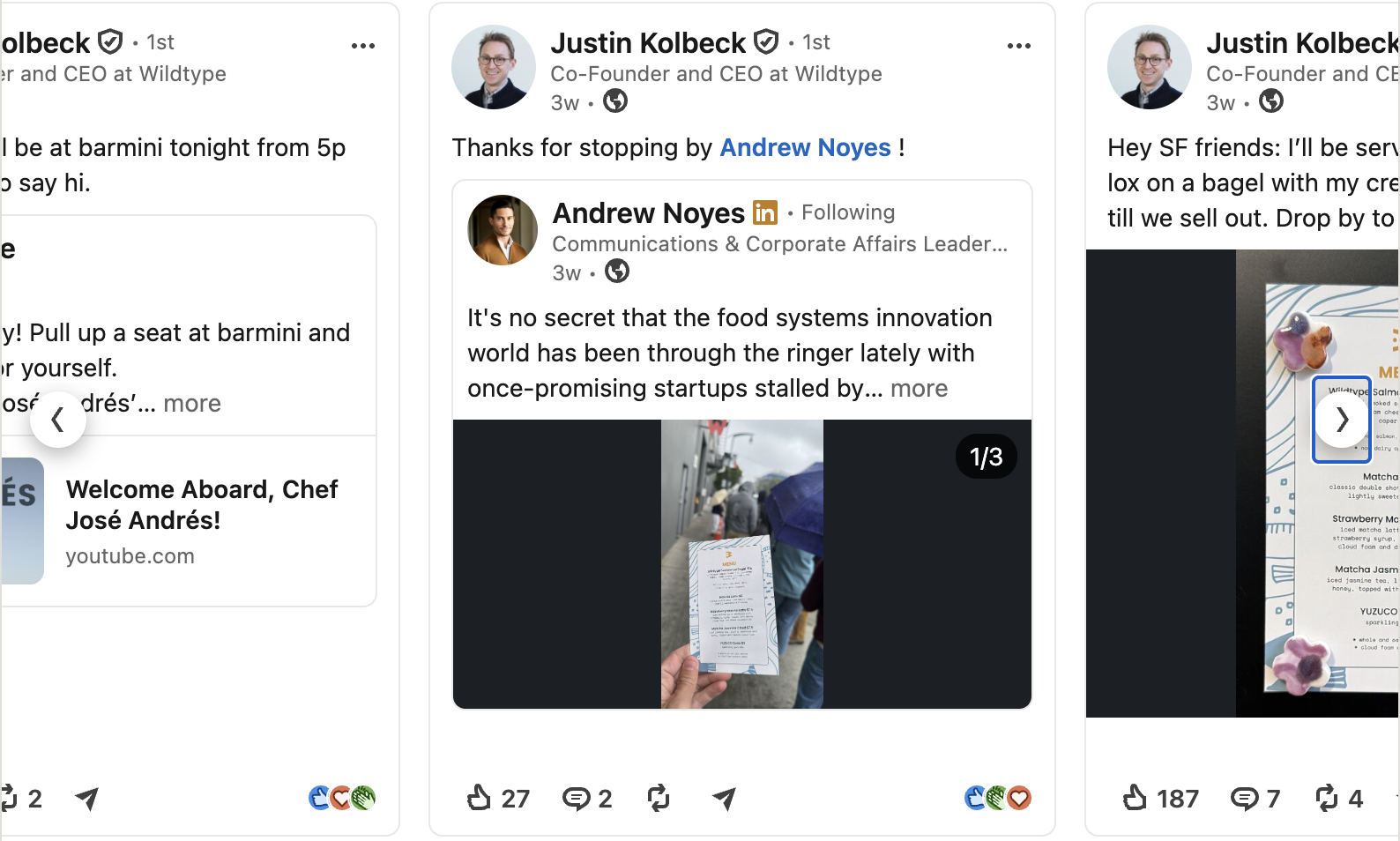
And look, I get it. Hard tech eats everything. When you’re building something as hard as Wildtype, posting on LinkedIn feels like the least important thing you could do. The product speaks for itself. To a point, it does. But here’s the part that gets me.
A stranger just spent 45 minutes with you. Then what?
Picture who finishes an episode like that. Someone in the sector. Another founder. An investor’s analyst. An engineer wondering where to work next. They liked what they heard. They want more of this person. So they do the one thing everyone does.
They look you up.
That click is the most interested a stranger will ever be in you. Peak intent. You won’t catch them higher. And they land on a wall of other people’s posts. Gone.
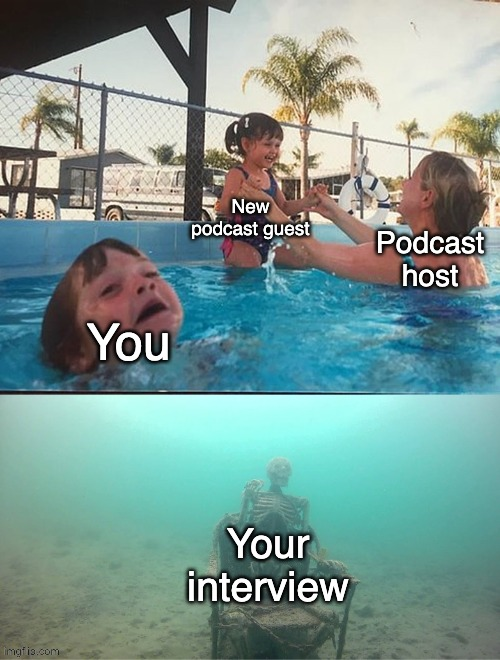
1. The most curious person you’ll meet this year hits a dead end.
Every appearance sends a small wave of high-intent people off to find you. A profile with nothing of yours turns that wave around at the door. You paid for the attention with your time on the mic. Then you let it leave.
Nobody publishes a clean number for how many listeners look up a guest. What the research does show: Edison and Sounds Profitable’s landscape study found most listeners act on what they hear, visiting websites and searching for things an episode mentioned. Looking you up is the cheapest of those actions, and the first.
2. A blank profile cancels the credibility you just borrowed.
A host like Goldstein lends you his trust for an hour. His audience extends you the benefit of the doubt because he did. That’s borrowed authority, and it’s the fastest credibility a founder can get. It is also measurable: Signal Hill’s brand-lift benchmarks show podcast exposure reliably moves favorability and purchase intent several points from a single campaign.
But borrowed authority has to land somewhere. When the curious listener checks you out and finds a dormant feed, the trust doesn’t transfer. It leaks away. “Impressive on the show” quietly becomes “I guess he’s not really active.” You didn’t just miss an opportunity. You undercut the one the host handed you.
And what the curious listener is looking for when they check is your thinking, not your brochure: in the Edelman-LinkedIn B2B research, 73% of decision-makers called thought leadership a more trustworthy basis for judging a company’s capabilities than its marketing materials.
3. One spike, then flatline.
A great episode is a spike of attention. Spikes decay. With a presence, the spike becomes an input: the new followers see your thinking, the episode lives on your profile where the next person finds it, one appearance feeds the next month. Without a presence, the spike just ends. Nothing to extend it, nobody kept warm, nothing captured. Next time you start from zero again. A flywheel needs something to spin. An empty profile gives it nothing.
Does a single podcast appearance matter for a heads-down founder?
Fair question. But that’s exactly why it matters. A founder that deep in the build doesn’t have time to chase attention, so the rare moments it comes to him are the whole game. The podcast was one of those moments.
It’s the rare hour where someone with an audience hands you their trust and their listeners. It’s how you reach the people the work alone won’t: the customer two markets over, the engineer who’s never heard his name, the investor who isn’t already a friend. He let it leak. Can you?
What this means for you
You don’t need a podcast to feel this. Any time someone external puts you in front of an audience, the same thing happens. A panel. An award. A press mention. A warm intro that ends in “you should look him up.”
So, one question. Next time someone puts you in front of their audience, what will the curious ones find when they look you up?
And when the next episode drops, the first three days do most of the work. I wrote up what the 72-hour window after an interview decides, and how to use it.