It’s Wednesday morning here in Helsinki and it’s a nice sunny day.
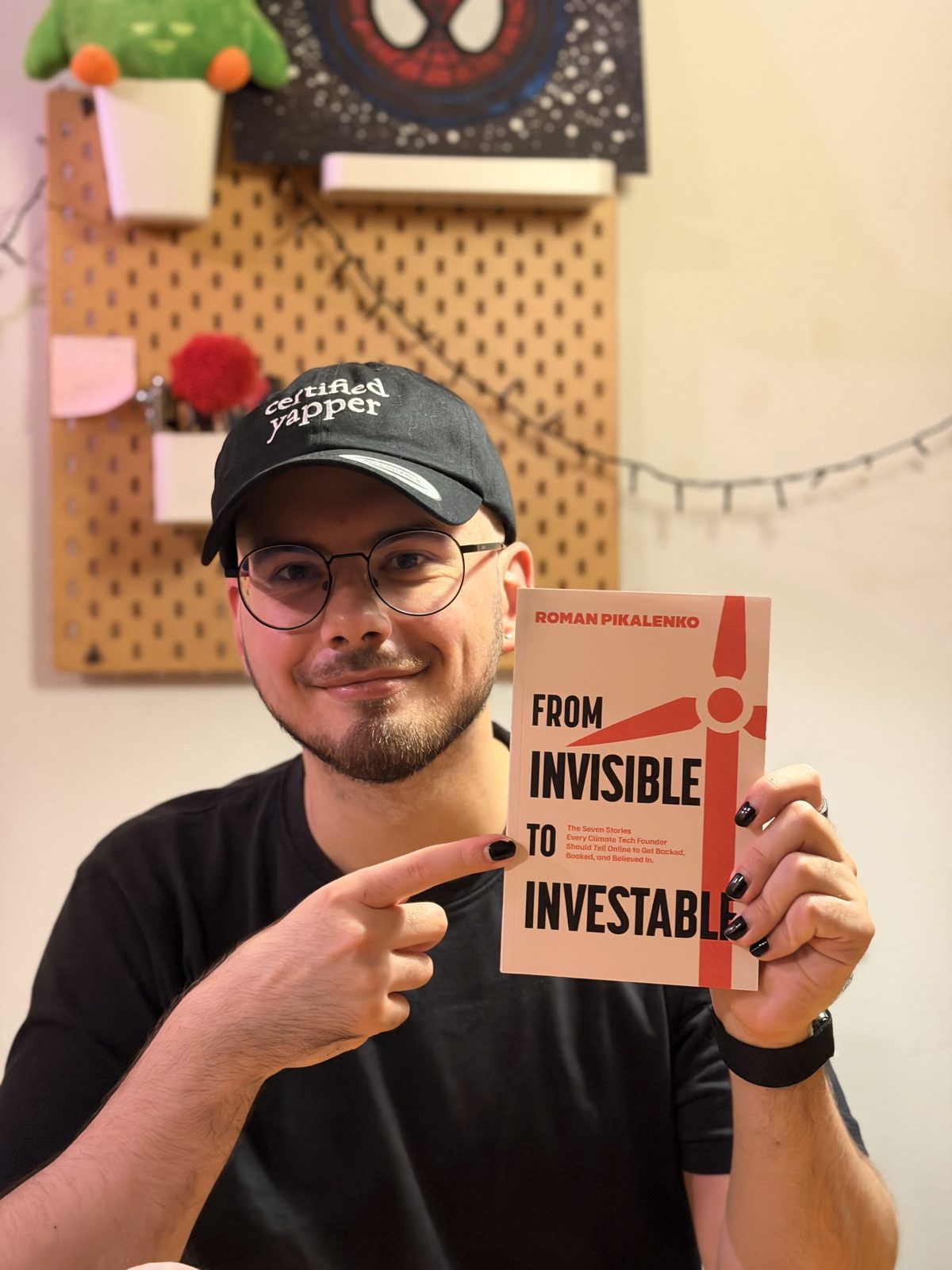
It’s extra nice because as of Saturday last week I’m now officially a published book author! Which is insane to me today at 27, would cause panic in me at 21, and absolute awe in me at 12. But nevertheless, here we are.
And because it’s the first book I’ve ever written or published, I thought I’d share everything I’ve learned from it as maybe, just maaaaybe, this might be helpful to you.
This is gonna be a long one, so let’s just cut to it.
1. Some people perceive being a book author as higher value than generating higher ARR.
As of now, I’ve gotten at least 2 messages like this:
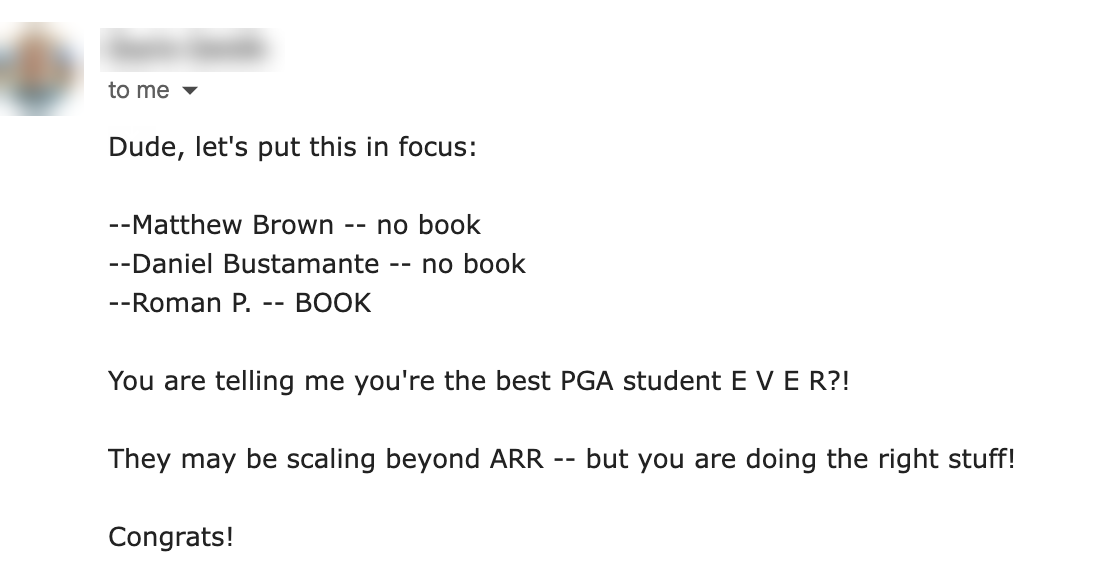
Which is crazy because, in case you don’t know, both Daniel and Matthew are wildly more successful and experienced business owners than I am commercially.
That being said, I knew being a book author has a certain status appeal. Guess I was right.
2. Can you use AI to write a book?
Using AI for writing was a complete clusterf*ck.
I’ve been a hardcore ‘shove everything I can into AI to see if it works’ kind of guy for months now.
Out of curiosity, I did so with one of the chapters. That little experiment cost me 2 weeks!!!! I swear I had to re-read it about 7 times across 2 days and it pissed me off that I didn’t quite understand what it wrote DESPITE me feeding it an hour-long transcript with my own thoughts.
Which reinforced a few beliefs I was already starting to form:
- I realised that the way I speak (which is messy and often disjointed) is VERY different from the way I write which is very expressive, messy in a different way, and much much more conversational and casual.
- It kept inventing analogies that did my head in. On paper, it sounded clever. But as I read it a few times I couldn’t help but notice I had no idea what it meant. I mean, I’m no Victorian prince. I speak plainly. So naturally, my monkey brain was confused.
- AI is great for complicated work like data analysis, reminders, weekly planning. But it’s pretty bad for complex work and anything that needs creativity and nuance. Writing, no matter how much I tried to beat my Claude into submission, just doesn’t come out sounding like ‘me’.
3. What is AI actually useful for when writing a book?
Where AI was helpful though is data collection and analysis.
Fact checking, research, examples, and the 7 types all came through working with AI.
What I did was a bit meta.
My Claude Code has access to all of the content I’ve ever produced for myself and my clients in the last 3+ years. And because I wanted to focus on storytelling as a topic, I got curious: are there any climate-specific stories that all accounts share? So I asked Claude.
It’s great at data analysis.
That’s when it shortlisted 7-9 different types of stories that showed up across email, articles, LinkedIn, podcasts, and speeches.
A couple of them were repeating themselves. A couple needed reframing as it sounded odd. And what I ended up with is the 7 you’ll see in the book.
4. Do you need existing content before you write a book?
It’d be 100x harder to write a book without all the social and email content I’ve written over the years.
The material came from more than 3 years of posting for myself and 14 different clients across all kinds of segments of climate tech and other non-climate fields, because I was not always a climate ghostwriter.
If I tried to rawdog it with nothing published online, I’d be:
- Severely stressed and putting myself under tons of pressure
- Wondering if what I was writing was interesting enough
- Struggling to write at all because I never did that prior
I had none of those problems.
And if you ever consider writing a book, I’d advise you go through the same.
Or hire a ghostwriter.
5. How do LinkedIn posts, podcasts and articles turn into a book?
Taking a general topic, which is storytelling in this case, wasn’t that difficult because I’ve written about it for years.
This feeds into my overall thesis of repurposing your existing content.
If you’ve ever browsed around my website, you’d have noticed the 4 core pillars of my business:
- LinkedIn content (or other social)
- Media (mainly podcasts)
- Long-form articles
- Book
Each step is an evolution of the one before.
You can’t write articles effectively without having tested the ideas in a shorter-form LinkedIn post. You can’t drive traffic from your podcast interviews you publish on YouTube if that traffic goes to a LI profile that hasn’t been touched in years. And you can’t write a book effectively if you can’t assemble it from several longer-form articles on that same topic.
I mean you could.
But it’d be 100x harder.
6. How do you write about storytelling without repeating the Hero’s Journey?
It’s pretty hard writing about storytelling without repeating the same tropes over and over.
Storytelling is an insanely saturated topic.
You’ve probably heard about the Hero’s Journey a thousand times, right? Well, every book out there that I’ve come across seems to have a LOT of focus on general, universal theory of storytelling. It’s simply exhausting.
And I didn’t want to have any of that.
So I did the most sensible thing I could instead: made it insanely climate tech specific using climate tech examples, both curated and my own, with a ton of my own writing style, quirks, and personality.
I also decided to give the 7 story types I picked unique names.
7. My title has one vague and unclear word that I kept on purpose.
The full title is From Invisible to Investable: The 7 Stories Every Climate Tech Founder Should Tell Online to Get Backed, Booked, and Believed In.
“Booked” is something my mentor flagged.
It was confusing. Booked as a speaker? Speaker where? Or booked on a sales call?
I left it open-ended on purpose because frankly it can and does mean either or all of those things. Plus, it rolled off the tongue waaaay better: “….to get backed, booked, and believed in”, right?
Sacrificing that clarity to sound nice in exchange for potentially losing attention from some buyers was a conscious choice.
8. My cover designer Georgie asked me where I’d imagine my book to be on the shelf and I had no idea.
No such category exists.
Why? Because my book’s positioning could be described as ‘climate tech storytelling’ or ‘climate tech business’ or ‘climate non-fiction’ or simply ‘climate tech’. Now, I don’t know about you, but I’ve NEVER seen such a bookshelf in any book store no matter how big the store was.
But I didn’t let it stop me.
9. What pages does a book need besides the chapters?
I spent months working on the chapters but didn’t realise I also needed other pages.
Silly me thought the book started at Introduction and ended at Conclusion.
But, if you’ve ever read a book, and I hope you did, you probably remember that almost every book has pages like:
- Copyright
- Acknowledgements
- Table of contents
- Foreword
- Epilogue
- Sources
- Back cover copy
- Title page
- About the author
Yeah, I had no idea for the first 3 months.
10. What is typesetting?
I had no idea what typesetting was until I had to figure it out.
Typesetting is all the interior design of your book.
Think the start of each chapter paragraph, the chapter titles, formatting of quotes, etc. It’s its own thing and it makes your book look more professional than if you simply exported your Notion draft as a PDF.
11. Book cover design I liked most was the least popular.
This was the design I fell in love with.
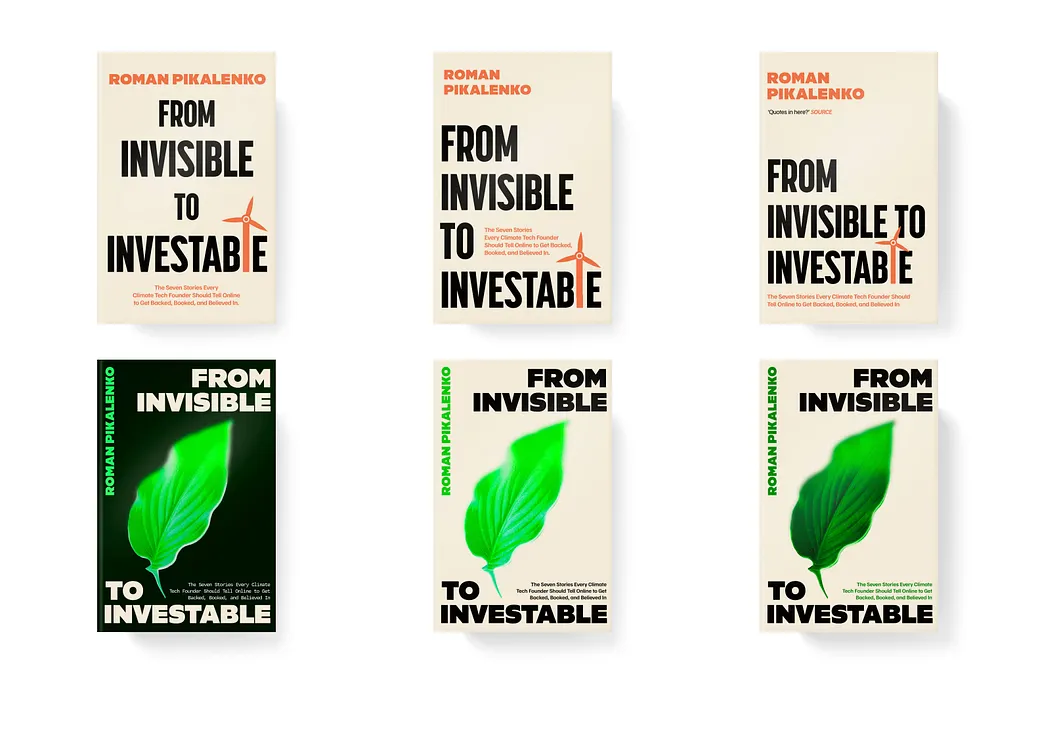
However, I had in total 3 rounds of reviews by friends, family, and my community and that one scored the lowest.
Again, I had to swallow my pride and go with what the market was telling me.
12. Do you need an ISBN to self-publish on Amazon KDP?
ISBN is essential and in Finland it’s SO much easier than in the US.
ISBN is a unique identifier that you should have for each version of every book.
Technically, KDP doesn’t require one for ebooks. But Cole recommends your own ISBN for every version if you want to own your book as an asset.
I was taught to write books by a mentor in the US.
There, one company, Bowker, has a monopoly on ISBNs. It costs $125 for one ISBN or $295 for a pack of 10 ISBNs. That’s nuts to me.
Thankfully, in Finland it’s free.
All you have to do is apply for it. I got mine within 2 days.
That being said I should’ve looked it up in advance. As I said, every version of your book, i.e. ebook, audiobook, paperback, needs its own ISBN. I made the mistake of thinking I was only doing paperback, so I only ordered one ISBN for paperback. Had to do another request for the ebook version.
13. What do you need to set up in KDP before you upload a book?
Make sure your KDP account is set up fully before you upload a book.
This is basic, but I had to fix my 2FA, confirm my payment method, complete my account, and verify my identity in order to receive royalty payments.
And then it takes KDP days to review the changes.
14. How do you set a realistic deadline for writing a book?
It helped having a clear deadline for the book’s release in mind.
Specifically, I had a deadline for finishing writing by the end of July and for the release at the end of August. I calculated how many weeks I had and focused on writing one to two chapters every single week.
I think most writers and authors approach such a project in two ways:
- With a bit too much freedom and no deadline. As a result, they never feel the right amount of urgency and don’t ever finish the book.
- With too much pressure, especially if the deadline is from the traditional publisher they partnered up with. That I couldn’t stand.
In my case, I knew realistically how much I could commit based on my energy and productivity work I’ve been doing over the years. Although of course that was still expected to be inaccurate from the start.
So what I did was a micro experiment.
I recorded how long it took me to write the first chapter, Origin Story. It was roughly 2.5h for the full v1 draft. So I simply used it as a baseline, looked at my calendar, and realistically guesstimated where I could squeeze in one or two 2.5-3h writing blocks each week.
15. How many hours a week does it take to write a book?
My summer was the building season.
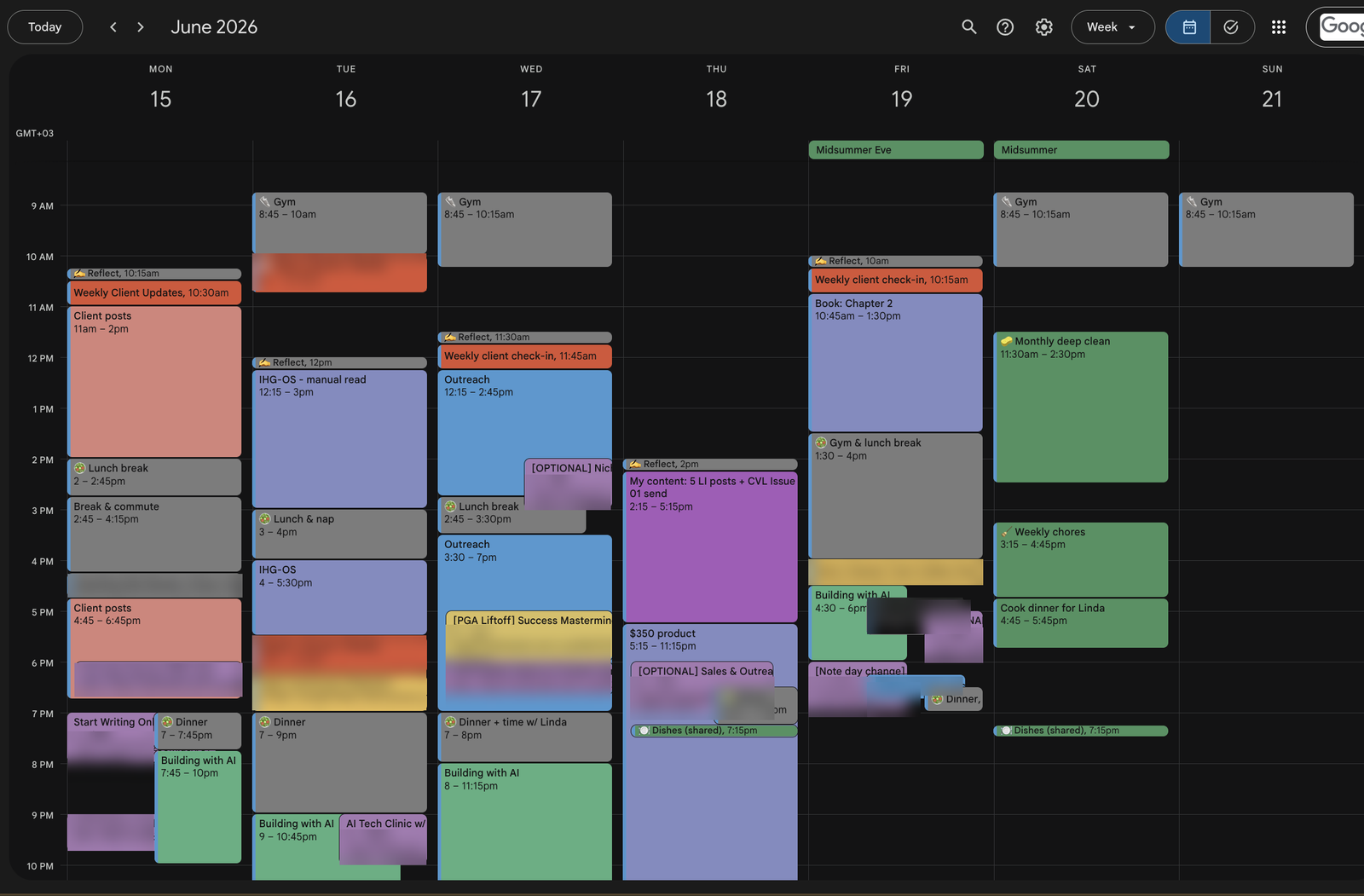
I had to sacrifice all of my vacation plans, TONS of friend hangouts, quite a bit of sleep, and, more importantly, gaming on most evenings and weekends.
(I’m a huge video game nerd)
But that’s all well and good if you have a plan. If you don’t, it all goes to sh*t. So I went ahead and made one.
I started working on the book in late April and I was working on it for roughly 2.5-6 hours per week. The goal was to write 1-2 chapters per week, finish writing by the end of July, use August for design and editing.
I finished about a week early on the writing part. Editing took maybe 3 weeks longer than expected. And design + typesetting? That took about 5 weeks longer than I thought.
16. Why does self-publishing take longer than planned?
It took me roughly 5 weeks longer than I planned to actually release the book.
My goal was to release the book by the end of Aug so I could focus on growing my email list from Sept to Nov and prep for my civil service here in Finland that’s in Nov.
The universe took a massive dump on my plans.
- First, the cover designer was swamped for about a week longer than I thought.
- Then the typesetter had the same issue.
- I went into hiring a typesetter without researching what it actually even meant. As a result, every time he sent an edit, I’d ask 10 different questions. That delayed us by about 2 weeks.
- To make sure my community felt involved, I promoted the cover design twice on my socials and email. It was a great idea, but it took time and I didn’t factor that in.
- The ISBNs took 4 extra days I didn’t account for.
- KDP reviewing my profile took 3 extra days.
- KDP reviewing my book took an extra 2 days.
- Waiting for the local copies to be printed took extra 4 days.
Plus, a lot of micro decisions kept falling on Fridays for some reason for the other person to only pick it up and reply to me with an update on Monday. I know, not a big deal, but again, I didn’t factor it in.
17. How much does it cost to self-publish a book?
I spent just over $5,000 in total on the whole project.
That number is an estimate because of the currency exchange. But if I were to list every single thing I paid for, it’d be:
- €1,000 for cover design
- £350 for typesetting
- $199 for Publisher Rocket
- $3,100 for the Self-Publishing bootcamp by Nicolas Cole
- About €30 per every book I personally shipped to friends and clients
- €293 for the exclusive 20 printed copies
Plus, KDP takes its cut. I keep 70% of every ebook sale after VAT and delivery fees, and 60% of every paperback sale minus printing costs.
18. Do you need a big launch for your first book?
I really wanted to have a big book launch but had to shut that thought down right away.
My success metric for anything I’ve done for the first time in business lately has been “before I didn’t have it, now I do.” I did that with my first digital course. And I did the same with the book.
Which means I had no waitlist, no big warm-up email campaign, no multi-day launch, no live event or anything like that.
The only thing I did do pre-emptively is ask my audience twice, both on LI and email, what cover design they like most.
19. Why can’t some readers leave an Amazon review?
You can’t leave an Amazon review unless you’ve spent €50+ in the last 12 months.
And my book in the EU runs at €6.99 or €17.99. I guess Amazon has this in place for preventing fake reviews which is good.
But then I get a few people who simply wanted to support and genuinely can’t because they don’t buy much or at all from Amazon. That’s quite annoying.
20. How do you make an audiobook for a self-published book?
Audiobooks are more effort than I thought.
Apparently, there are two main ways to do it: hire a professional narrator or narrate yourself. I’d obviously do it myself because, despite my accent, I think it’s the right way to do it. Or, at the very least, I’d like the same from any author whose books I read.
An even trickier part is how you go about creating the audiobook this way to begin with. A few suggestions I’ll be implementing when I work on my book’s audio version:
- Expect that it’ll take 2-3x longer to record the narration than it takes to read it. If my book takes 3h to read, then recording it will take 6-9h. If I were to do it for 1h a day every day, that’s a couple of weeks easily.
- I’d still need to hire an audio engineer. Apparently, my recording (which is best done on simple software like GarageBand) still needs to be stitched together. And even Claude Code, when I asked it, refused to try it and suggested I hire a professional.
- That audio engineer can be from Upwork (even though I’ll try and look for references from other book authors I know).
- That audio engineer might charge per hour but costs $3,000-$5,000 on avg. Cole, my ghostwriting mentor, has a degree in music engineering, so I trust these numbers.
Now, the last step is where I’d have to fight my own ego.
At this point at least 3 people asked me if I have an audiobook version. One of them is an extremely successful, but busy business owner. He simply said he doesn’t have time to read ebooks or paperbacks so he listens to stuff.
And I realised CEOs and founders of later-stage climate tech companies (my ideal target buyer) are no different.
Which means I have two options, depending on how much risk I want to take:
- Option 1: High risk. I invest a few thousand into the audiobook now in hopes of higher reward. That reward being the audiobook market rapidly growing (US audiobook sales grew 9% to $2.43 billion in 2025).
- Option 2: Low risk. I wait till I make said $3,000 in profit from my current book and ONLY then work on the audio version.
I’m going with low risk.
It presents a different set of challenges and forces me to get creative on how to make the most of my current book.
And if it doesn’t sell that much…well, I shouldn’t waste all that time and money on the audio version, right?
Sooo….
Promote the sh*t out of my book till I make at least $3,000 in royalties so I can reinvest it back into the book and make the audio version. That means, I need to sell about 560 ebook copies or 370 paperback copies. Challenge accepted.
And that about wraps it up.
It’s a good thing I journal every single day and take notes of what’s going on. Helped me document my experience with this.
But now I’m bringing it back to you:
- Did you find any of this surprising? Interesting even perhaps?
- Is there something that triggered more questions? What are those?
- Would you ever write a book or become a book author?
Genuinely curious.
DM me on LinkedIn, send me a pigeon—whatever floats your boat!
In case you still haven’t checked out my book, take a look here. Or share it with someone who’d enjoy it!
Whenever you’re ready, there are 3 ways I can help:
1/ Get a copy of my book → It’s called From Invisible to Investable: The 7 Stories Every Climate Tech Founder Should Tell Online to Get Backed, Booked, and Believed In. Perfect if you’ve never shared stories online before.
2/ Use my Climate Tech Post Vault → these are my 55 most reused LinkedIn post templates that generated 13,321 reactions, 2,187 comments, 999,365 impressions across all of my work.
3/ Buy your In-House Ghostwriting OS → An all-in-one system for solo marketers and small marketing teams in climate tech companies to create, launch, and grow a system for building their CEO’s personal brand on LinkedIn.