Adam Tank is a co-founder of Transcend, a water-tech company in Princeton, New Jersey whose software produces a complete preliminary design for a water, wastewater or energy plant in hours instead of the weeks it normally takes. Its product, the Transcend Design Generator, has designed 7,000+ treatment plants across 70+ countries, automates roughly 90% of the preliminary-design work engineers used to do by hand, and by Adam’s own count has helped bring clean water, wastewater and power to over 635 million people. Autodesk invested in August 2023. Here is how he built it, and why he argues water needs less innovation, not more.
Welcome to the 1st official edition of Climate Founder Letters, a newsletter version of what many of you might know as Climate Founder Mondays on my LinkedIn and a new sub-series under Climate Visibility Lab. If you’re not, CFMs have always had one purpose: highlight most influential yet underfeatured climate tech founders out there, specifically focusing on their stories over their tech. Everyone covers tech.
But I realized that tech is essential to everything these awesome founders do. So, to fit in both elements I’m expanding the format to long-form. Enjoy and let me know your thoughts.
Water tech is a very interesting space.
On the one hand, there isn’t enough innovation and the water problems are getting worse globally. On the other, we see water as a commodity and one has to wonder “how much innovation do we even need?”
Well, the founder I’d like to talk about today is of the latter mindset.
His name is Adam Tank, and he’s a co-founder of Transcend, a water tech company focused on automating compliant, high-quality conceptual designs for water and energy infrastructure.
So, in this issue, we’ll cover:
- Who Adam is, his background, and why he started Transcend
- How the tech works, and what’s unique about their approach
- Social proof and the impact he’s had on the world
- What Adam told me, in his own words
Let’s dive in.
Who is Adam Tank?
Somewhere in Adam Tank’s GE Water years, an innovation lead at a large US utility slammed a hand on the table.
“I don’t need any more leak detection solutions. Leaks are cheap.”
“If I could just have one thing, it would be a robot that would go into my pipes and fix them from the inside.”
That wish became Adam’s first company.
Adam grew up among government workers, paycheck every two weeks. After Kansas State: quality engineer at General Mills, their largest yogurt plant in North America. Also a stint in Brazil, and an MBA at the University of Arizona in 2015.
Ralph Exton took him on for a GE Water internship, though Adam had no background in water. Exton was willing to take a shot on him, and runs the Water Environment Federation today. The job became venture diligence on hundreds of early water startups.
GE ran an in-house Shark Tank.
Adam pitched a robot that didn’t exist yet:
“There’s no way I could have built a robot first myself.”
He won, and GE’s venture group funded a spin-out in San Francisco.
Before building anything he told East Bay MUD’s engineering lead: “I have nothing to sell you.” The lead told him what the robot had to do. At San Francisco’s utility, they literally went dumpster diving for cast iron pipe.
About three years in, a public company bought it. Adam holds a patent on the device, which detects a leak, travels the pipe and repairs it from inside.
Then Suez, as their North America Smart Cities Director. “I made it 12 months, almost 12 months to the day and couldn’t do it. I just couldn’t do it.” “It’s really hard to go back to the big company once you’ve done the small stuff.”
In 2019 an old colleague, Steve Davis, called about spinning a software business out of Organica Water. Ari Raivetz ran Organica, and he’s Adam’s co-founder today. His problem, quoted by Adam: “I can’t afford to hire an army of engineers to do this work... I can’t have them tied up doing proposals, but then I also can’t grow the business if no one’s doing proposals.”
So, how much innovation does water even need?
In Adam’s words: “Not a popular opinion in the water sector, but I actually don’t think we need as much innovation in water as people think. We actually need more innovation in energy.”
The failure he does see is in planning. He puts 80% or more of a project’s outcomes there, in a phase he says gets the least time of all.
Transcend was built for exactly that phase.
How does the Transcend Design Generator work?
If you’ve never sold to a water utility: a preliminary design is the first full sketch of a treatment plant. It’s drawn up before anyone agrees to build it.
Each one takes hundreds of engineering hours, often unbillable, and a lost bid throws them away. Ari Raivetz had been automating that inside Organica Water in Budapest since about 2012. Transcend spun out in 2019: about a dozen people, Princeton, New Jersey.
The product is the Transcend Design Generator, a cloud platform.
You feed it a handful of inputs, and it checks them against Transcend’s databases first, so bad data gets caught before it spreads. Then it designs every discipline at once: process, mechanical, civil, architectural, electrical, control and automation. Back comes the design plus a dozen or more documents and drawings, 3D BIM models and equipment lists.
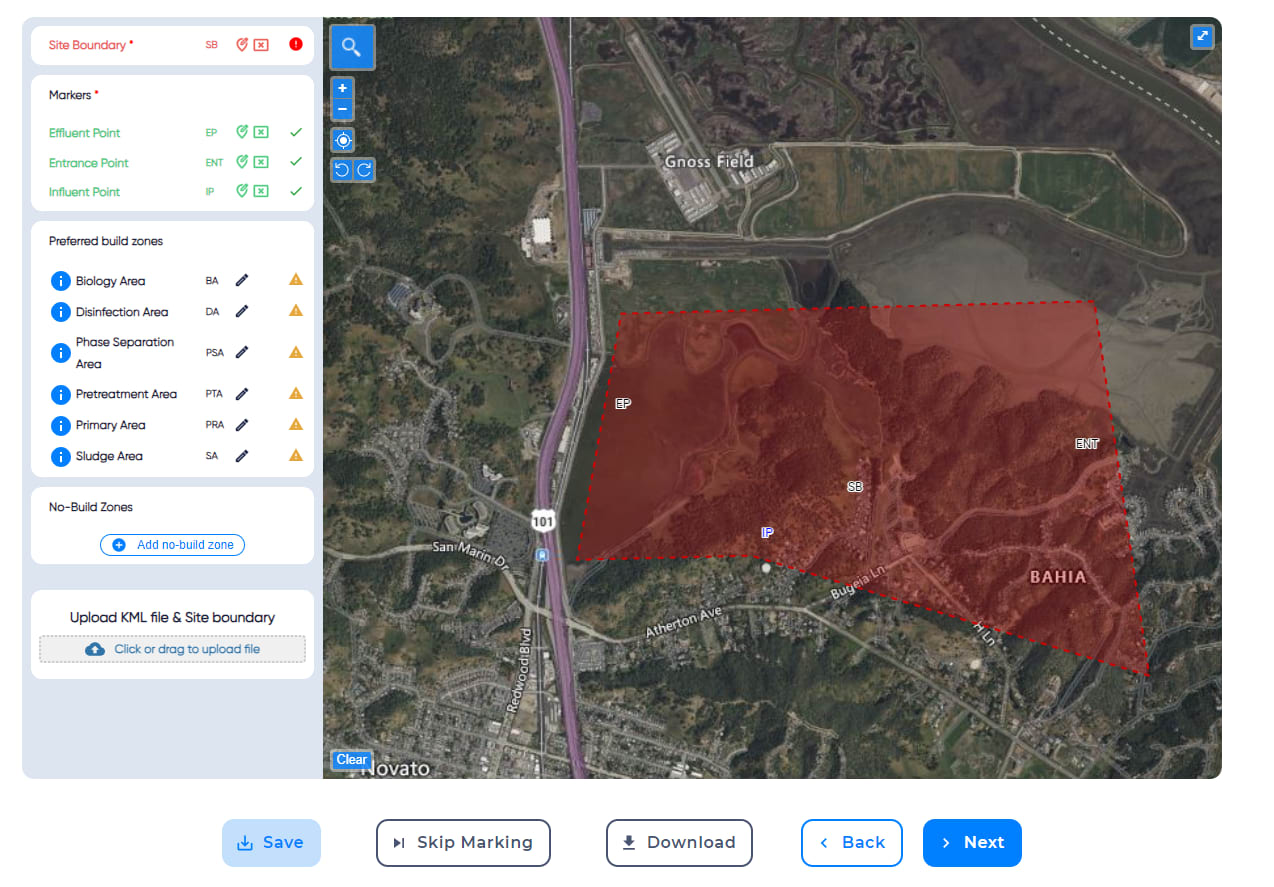
In hours.
Transcend’s claim: someone who knows little about wastewater engineering can get a complete preliminary design out of it. They call it generative design. Adam is quick to say no large language model is involved.
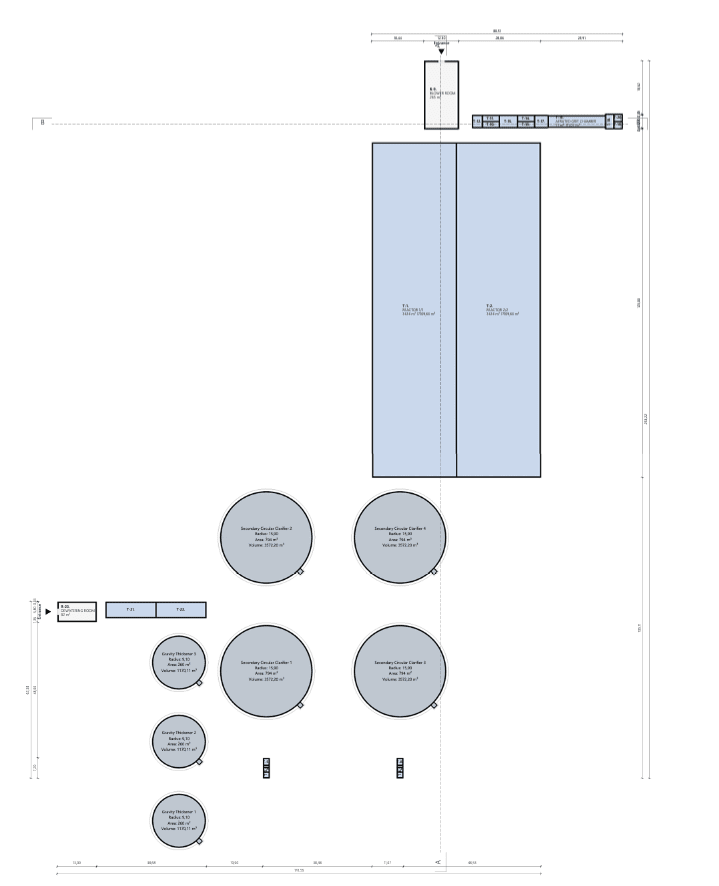
What changes for the buyer is the number of options.
In the same time and budget, Adam says, “you’re looking at a minimum of 10x the number of options. So, 3 to 30.” A utility can tell its board “we looked at 50 options for this plant. 47 of them were garbage, but these three are awesome.”
The drawings come out native to Autodesk’s AutoCAD and Revit. In August 2023 Autodesk invested in Transcend. After that, Adam says, prospects stopped asking “if you go bankrupt are we screwed”.
Which brings me to the numbers.
How big is Transcend’s impact? 7,000+ plants, 70+ countries, 635M+ people
I’ll be honest with you, Adam is way more active online than even me. Virtually every corner of water tech I looked into, he’s present in.
That’s what I call impossible to ignore.
So, what exactly has Adam’s work generated so far?
Well, Transcend alone has:
→ Designed 7,000+ wastewater treatment plants on the Design Generator
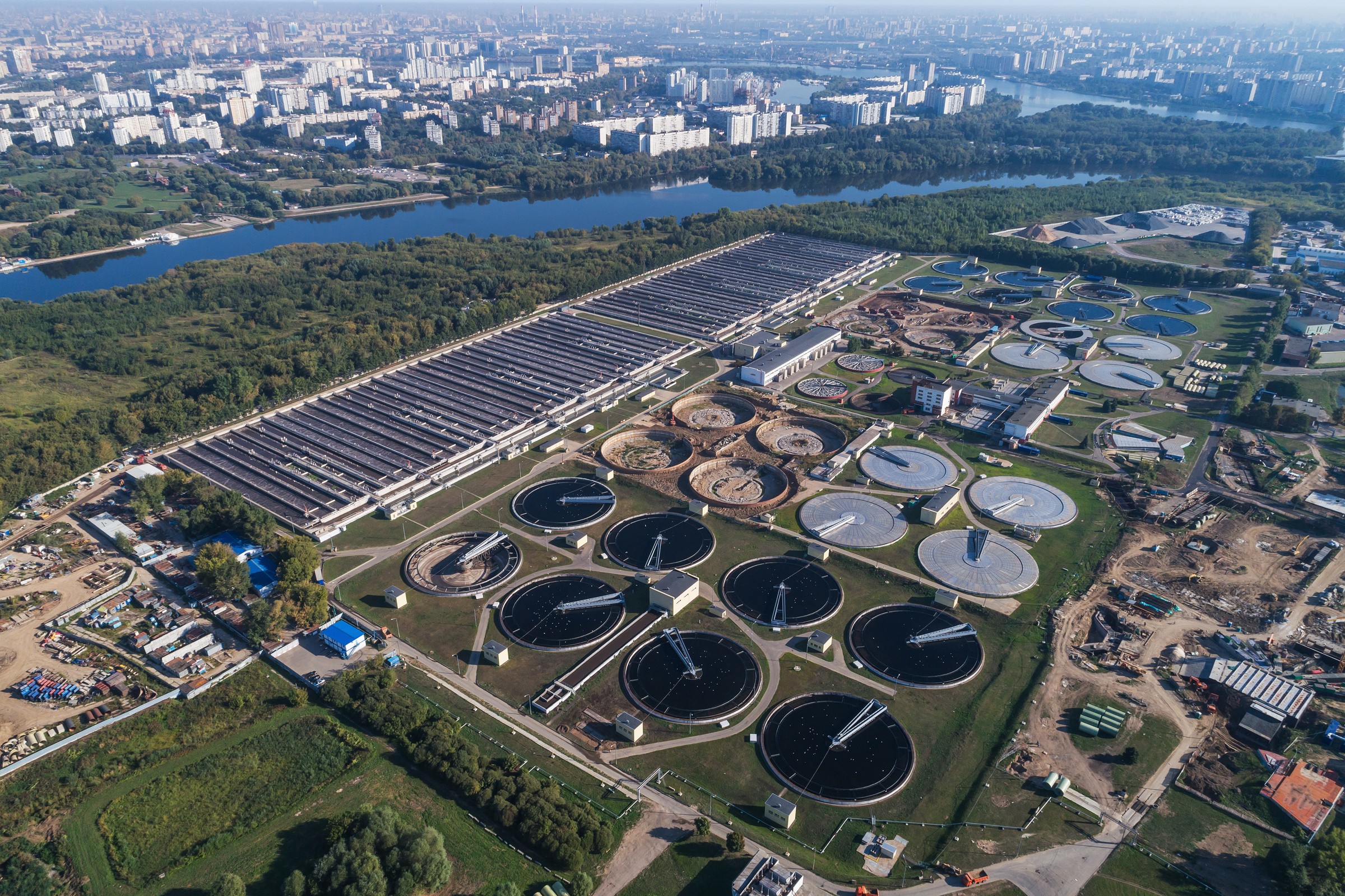
→ Automated roughly 90% of the preliminary design work, the hours firms used to burn and often couldn’t bill
→ Designed projects in 70+ countries
→ Raised about $35M, $20M of it the Series B Autodesk joined in August 2023
→ Provided over 60 million people with clean water from the robo
→ And in total over 635 million across water, wastewater and power, which a number he’s tracked on Twitter for years
Outside Transcend he co-hosts “Water We Talking About?” with Jim Lauria with, as of today, 75 episodes. He started it because he felt like he had to help the water industry tell better stories. His water newsletter passed 5,300 subscribers in 2026.
He’s also been a foster dad for almost three years. On one of the interviews he said “there are some 400,000 kids who currently don’t have a home... that just kills me.” He volunteers with Big Brothers Big Sisters too.
I mean, what’s not to like?
What Adam told me, in his own words
When I asked him what he was most proud of, he told me:
“Positively impacting the lives of over 635M people globally, with clean water, wastewater, and renewable sources of power.”
I asked if 1 billion was next.
“That’s the next stop. But it will go much bigger.”
Well, damn, where do I sign?
Liked today’s piece?
I’m always on the lookout to interview exceptional climate tech founders actively making the world a better place. A lot of them are like Adam: they build things that matter, then let the story go quiet. I’m on a mission to fix that, by making them as visible as the work deserves.
If you know who I should talk to next, feel free to reach out or connect us via email.
Till next time,
Roman
PS. This is exactly why I started my ghostwriting practice for climate tech founders. Featuring them in a single email or article is great, but it’s not scalable. Building their online visibility through thought leadership content, however, is far more powerful.
DM me if you want to see how we can take you from being invisible online to investable and impossible to ignore.
About the Author
Roman Pikalenko runs Kaizen, a solo studio that takes climate tech founders from invisible to investable. He’s ghostwritten 2,200+ posts for 14+ founders across 4 continents, among them 3 LinkedIn Top Voices and a Forbes 30 Under 30, whose companies have raised over $200M combined. Roman is an incoming self-published author; his first book, From Invisible to Investable, on the storytelling behind all of it, is expected Q4 2026.