I’ve spent 3+ years ghostwriting, 2.5 of them for climate founders, and tracked everything.
On one client’s roster alone, founder-as-subject posts outperformed company-subject posts 2.8x. And of 135+ pure educational explainers another client published, not a single one cleared 3 comments.
I wrote all of those explainers myself. That’s exactly how I learned this lesson.
That’s why the first post we publish with every client is a story. Why? Because across every client I’ve tracked, the best-performing post of all time is a story.
I won’t be sharing the storytelling theory.
“Tell stories” is the oldest advice in marketing, and you’re better off picking up an actual book on that.
Instead, I’d like to share 5 extremely climate-specific reasons why you, as a climate tech founder, should care deeply about telling more stories online.
Let’s dive in.
1. People forget your numbers by lunch, but they retell your story for years.
In Made to Stick (2007), Chip Heath describes a class exercise he runs with his Stanford students.
Students gave short presentations built on crime statistics. Ten minutes later, the professor asked them to write down everything they remembered. Only 5% of the class remembered any individual statistic, while 63% remembered the stories. And the average speech used 2.5 statistics.
Only one in ten students told a story.
That is what a story does that a number cannot.
Hell, this is something I’m dealing with on a daily basis in my business.
I used to ghostwrite for a deep-tech CEO from Spain. Brilliant researcher. And like any brilliant person, he had his ambition challenged by his peers and mentors.
In fact, one of his mentors told him early on that scientists couldn’t be CEOs.
That sentence became one of his core drivers and one of his pillar stories. We shared it on his socials, and it’s a recurring theme whenever he talks about his company’s origin. Sure, his tech is amazing (climate risk modeling is in high demand today).
But when it comes to asking “who’s leading in this industry?”, he’s become the obvious choice as a thought leader.
2. Climate trust is built over years, and stories are the only content people will consume that long without feeling sold to.
Think about the last enterprise deal you closed.
How many touchpoints did it take before they stopped doubting you?
Enterprise sales are long (12-18 months), difficult to maintain, and they test your patience. But the biggest mechanism that both you and the other party have to consistently build is trust. And trust takes more than one impressive meeting.
It’s built by showing up consistently, which might mean:
- Getting ahead of their objections. For example, sending useful resources that answer any pending questions.
- Going to the industry events. That often means spending thousands of euros (or dollars) on conferences, plus an insane amount of mental energy that goes into the before, during, and after, so you can explain what you do in person.
- Relentlessly following up. And unless you have an experienced sales team, or at least an anti-fragile mindset when it comes to rejections, that means doing it manually, for months, with a very low % of success.
Notice what they all have in common?
Repetition fatigue.
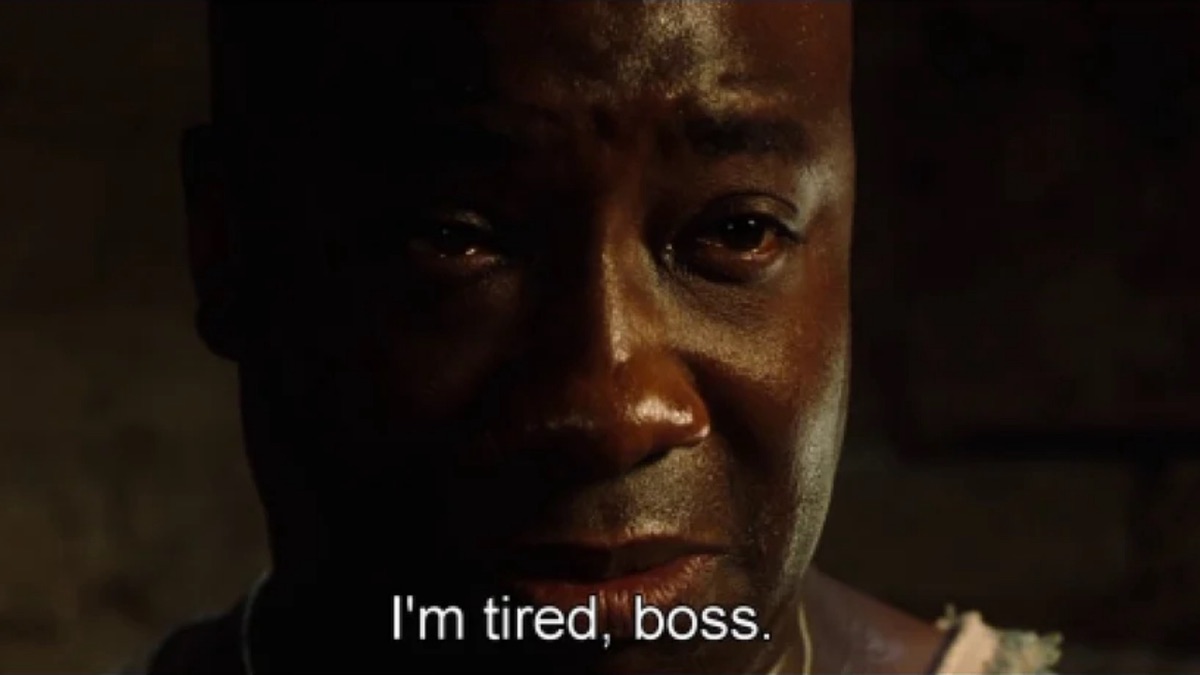
It’s that nagging feeling in the back of your brain screaming “I’m tired, boss.”
And it’s hard for the other person too. In fact, nobody reads 10 product updates and remembers all of them. Part of it is that every update reads like a pitch, so people skim it with their guard up. But try telling 10 distinct stories.
I bet you they’ll be stuck in your reader’s mind. And not once will they feel like you sold them anything.
A couple of examples I’ve seen from the stories my clients have shared:
- A German solar founder’s job applicants arrived pre-warmed. They were quoting his posts back, saying, “This is exactly what I want.”
- Two other solar software founders had a Mexican installer open a sales conversation with “we saw you on LinkedIn”. That installer became one of their first customers in the market.
As a result, the conversations that start from a story start warm.
And warm conversations shorten the three timelines you, as a founder, care about most: fundraising, sales, and hiring.
3. The more technical your work, the fewer people can understand it without a story.
To a generalist investor, a journalist, or a candidate, every climate tech claim sounds identical.
“We cut emissions by X%.” “Our efficiency is 30% above baseline.” Put five climate decks side by side, and the claims blur into one. Your company might be differentiated, but the language is not.
I bet you know the suckiest truth of it all.
An investor with your exact domain expertise is incredibly rare. The person reading your deck is usually a generalist.
Many care about ROI first. Sometimes, that’s ALL they care about. And they judge the leadership team to decide whether the ROI is believable. Before they can care about the technology, they have to be sold on who you are.
Storytelling is the best way to get in front of them and stay stuck in their head the way an annoying yet catchy tune does.
A water-tech founder I worked with once shared a story with me.
His grandparents’ hometown in China was once famous for its natural springs. By the time he visited as a kid, it was a rural village where people cooked on honeycomb coal, the springs had stopped flowing, and agricultural runoff plus unchecked urbanization during the boom decades had contaminated the water table. His grandmother died of stomach cancer that the family believes was tied to the water.
He used that experience as fuel to start his company.
It’s so powerful (and vivid) that you do not need to understand his technology to understand why he builds it.
“But Roman, my work is too technical.”
First of all, it doesn’t matter if you’re designing an ultra-thin water filtration system or a simple solar panel for your balcony.
To a regular Joe, both are too technical. Which means it’s your job to communicate the value of the solution and why they should care in a more digestible and accessible way. That doesn’t mean you treat your readers as ‘dumb’.
That means you need to realize your readers are not your peers or other researchers in your field. Those would be the technical audience.
And the best way to communicate the value of your tech is to tie it to something relatable, which stories just so happen to be a perfect vehicle for.
4. Your story is the one piece of content AI cannot write.
Every model on the market is trained on the same raw material: things people have already written.
What it doesn’t have is context unique to you:
- The scene where your investor walked out
- The smell of the workshop the morning the prototype finally ran
- What your co-founder said in the car afterwards
None of it is in any training set.
It exists in exactly one place, your head.
“AI can help people feel heard, but an AI label diminishes this impact”.
This is according to 2024 research in PNAS by Yin, Jia & Wakslak at USC.
They found that AI-written messages actually made recipients feel MORE heard than human ones, right up until people learned the source was AI. The label alone collapsed the effect. Is it human nature or general scepticism towards new tech?
I’d argue there’s an inherent need for human-to-human interaction.
A second 2024 study, by Altay and Gilardi in PNAS Nexus, found that labelling headlines as AI-generated made people rate them as less accurate, even when they were true. Suspicion alone costs you credibility. Imagine the damage it can do to your company’s reputation.
A verifiably lived story, however, is the hardest format to fake: it runs on details only you could know.
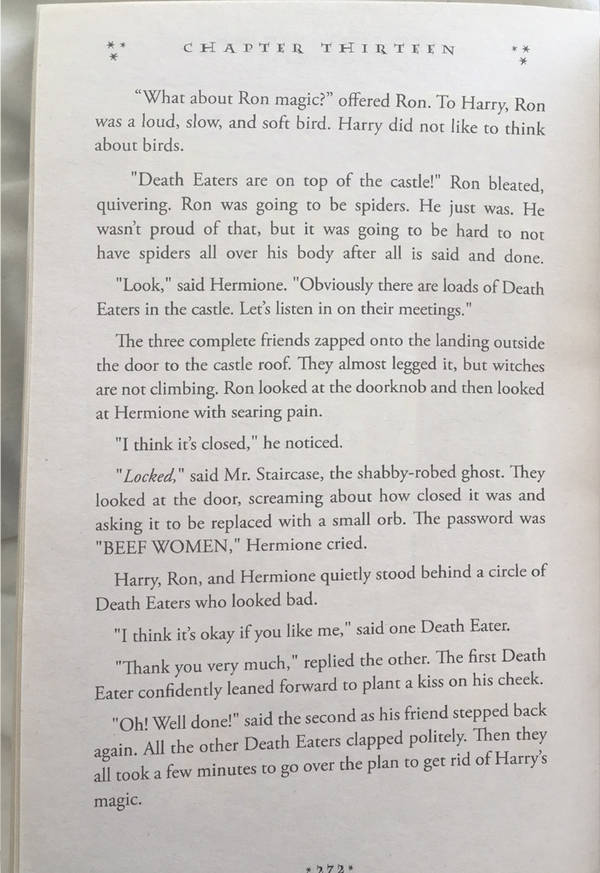
In 2017, a comedy collective called Botnik Studios trained a predictive-text algorithm on all seven Harry Potter books and used it to write a new chapter.
The machine suggested each next word; human writers picked from its suggestions. They titled the result “Harry Potter and the Portrait of What Looked Like a Large Pile of Ash.”
One line from it: “Ron was going to be spiders. He just was.”
Now, the writers were comedians, and they steered toward the absurd on purpose. But that is exactly the point.
The machine’s suggestions were all pattern and no experience.
It knew every word Rowling had ever used and had no idea what any of it was like. Professional writers with a perfect dataset could only make it funny. They could not make it true.
Models in 2026 are far better at hiding the seams than a predictive keyboard from 2017. The mechanism has not changed though: they remix what has already been written. The chapter of your life that only you were present for is not in the dataset.
5. One story gets shared at least three ways the rest of your content can’t.
In 2021, the five largest oil and gas majors spent an estimated $750 million on climate-related messaging.
That figure comes from InfluenceMap, who call it conservative because it leaves out external ad and PR agencies. The same report found that 60% of these companies’ public communications carried green claims, while just 12% of their planned capital expenditure went to low-carbon investments.
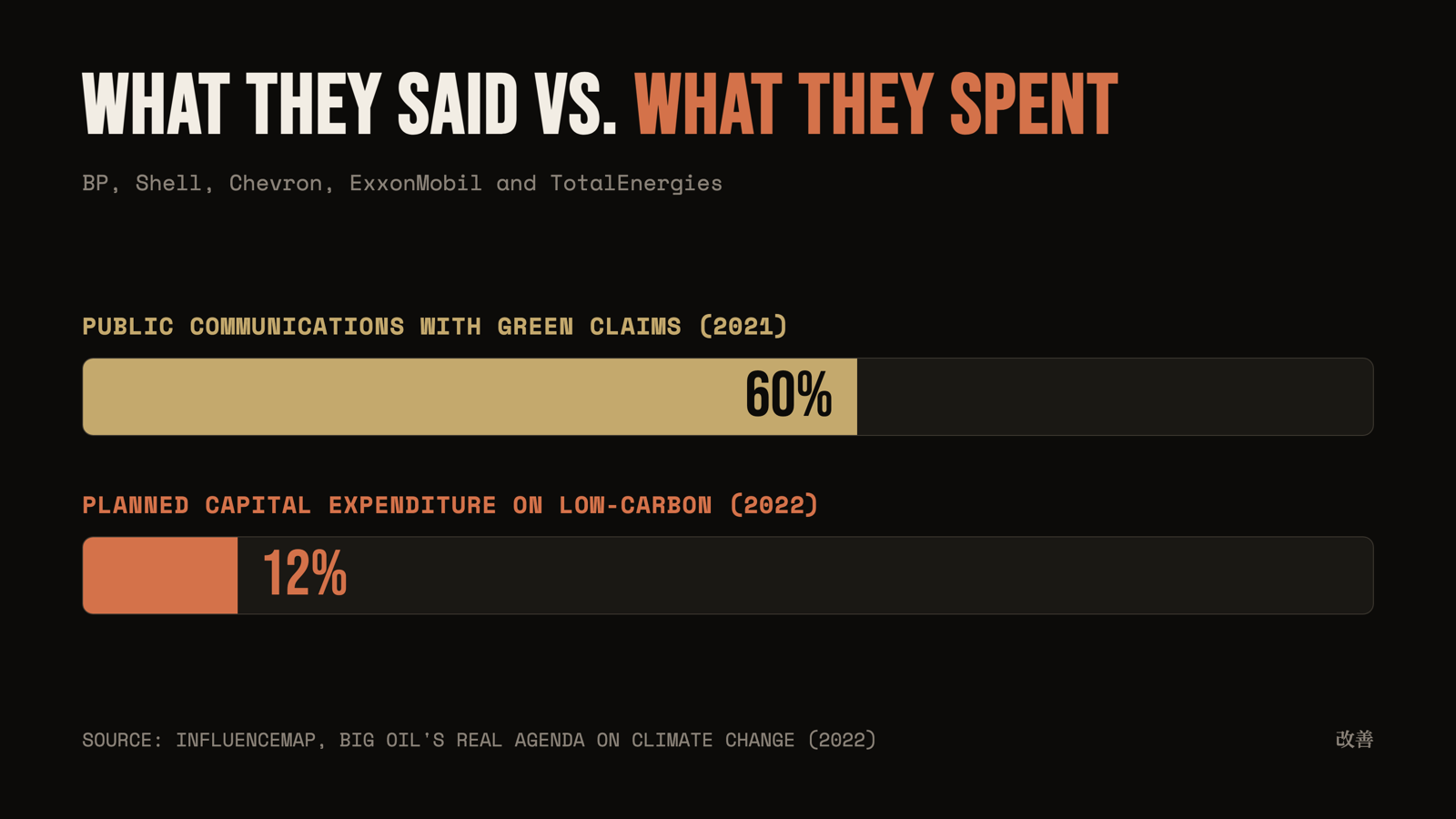
I’d call that a manufactured narrative. Keeping it alive cost three-quarters of a billion dollars in a single year, because the story and the reality keep drifting apart.
The asymmetry works in your favor.
A true story needs no maintenance budget.
Once it leaves you, it goes out in the world in three ways:
- It gets shared. A 2012 study by Jonah Berger and Katherine Milkman in the Journal of Marketing Research analyzed nearly 7,000 New York Times articles to see what gets passed on. The pattern was high-arousal emotion: awe, anger, anxiety. I’ve watched the same play out in my own data. The widest-shared post across every roster I’ve tracked was a story about people, a customer case about a school district that pulled 40 shares.
- It gets retold. A story keeps moving after the share button. An investor repeats it in a partner meeting. A contact mentions it over dinner. One of my clients heard from a man who had just joined a major aerospace manufacturer. He’d followed the company’s project stories on LinkedIn for months, and those stories are why he reached out.
- It gets reused. The same story becomes a pitch deck slide, a podcast answer, an investor update opener, and eventually a book. One client plans to compile his post library into a book to hand to new clients. Another retold his fundraising story across 20+ podcast appearances.
One good story keeps working years after you told it.
Climate tech storytelling needs hands-on advice, not more storytelling theory.
That’s my mission for the next 12 months.
If you’d like to read more on the topic, let me know what specific problems you’re running into.
Oh, and by the way, I cover all of this and more in my recently published book, From Invisible to Investable: The 7 Stories Every Climate Tech Founder Should Tell Online to Get Backed, Booked, and Believed In. Get your copy here.
Till next time,
Roman
Whenever you’re ready, there are 3 ways I can help:
1/ Get a copy of my book → It’s called From Invisible to Investable: The 7 Stories Every Climate Tech Founder Should Tell Online to Get Backed, Booked, and Believed In. Perfect if you’ve never shared stories online before.
2/ Use my Climate Tech Post Vault → these are my 55 most reused LinkedIn post templates that generated 13,321 reactions, 2,187 comments, 999,365 impressions across all of my work.
3/ Buy your In-House Ghostwriting OS → An all-in-one system for solo marketers and small marketing teams in climate tech companies to create, launch, and grow a system for building their CEO’s personal brand on LinkedIn.